Wirkmechanismus
Was die Darm-Hirn-Achse tatsächlich ist
Ein echtes Kommunikationssystem, das umfassend bei Nagetieren charakterisiert wurde und bei den Menschen, an die es vermarktet wird, viel weniger gut etabliert ist.
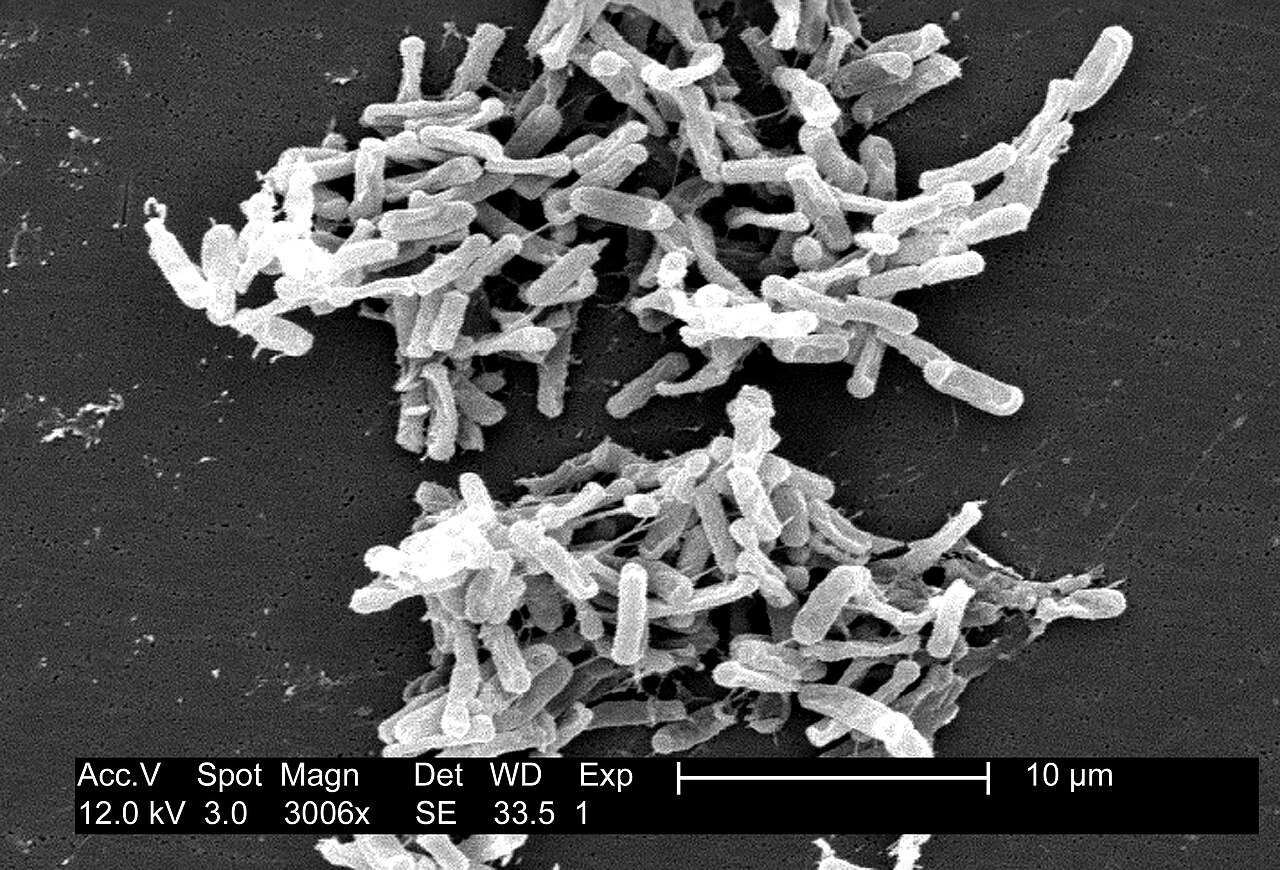

Die Wege
| Weg | Wirkmechanismus | Evidenz beim Menschen |
|---|---|---|
| Vagusnerv | Afferenzfaser tragen Darmsignale zum Hirnstamm | Anatomisch etabliert; kausale Rolle schwerer zu testen |
| Mikrobielle Metaboliten | Kurzzeitige Fettsäuren und Neurotransmittervorläufer gelangen in den Blutkreislauf | Messbar; nachgelagerte Effekte unklar |
| Immun-Signalübertragung | Darmdurchlässigkeit und entzündliche Zytokine | Assoziationen etabliert; Richtung umstritten |
| HPA-Achse | Stresshormone verändern die Darmfunktion und umgekehrt | Bidirektional und gut dokumentiert |
| Enterisches Nervensystem | Intrinsische Darmneuronen, die semi-autonom arbeiten | Gut charakterisiert |
Nichts davon ist am Rande. Das enterische Nervensystem enthält Hunderte Millionen von Neuronen und funktioniert mit erheblicher Autonomie. Der Zustand des Darms beeinflusst die Stimmung und die Stimmung beeinflusst die Darmfunktion, wie jeder weiß, der vor einer Prüfung nervös war.
Darm-Hirn-Kommunikationswege
Das Richtungsproblem
Eine systematische Übersicht findet Unterschiede in der Mikrobiota zwischen Menschen mit Depression oder Angstzuständen und Kontrollen [2]. Die Frage, die alles entscheidet, ist, in welche Richtung der Pfeil zeigt.
Depression verändert, was Menschen essen, wie viel sie sich bewegen, wie sie schlafen und oft welche Medikamente sie einnehmen. Jede dieser Veränderungen beeinflusst das Mikrobiom. Ein Unterschied in der mikrobiellen Zusammensetzung ist daher genau das, was man erwarten würde, wenn Depression eine Veränderung des Mikrobioms verursacht und das Mikrobiom überhaupt nichts tut.
Dasselbe Problem gilt für die Literatur zum metabolischen Syndrom [3] und für die Autismusforschung [4], wo diätetische Selektivität häufig ist und allein Unterschiede im Mikrobiom hervorrufen würde.
Was es klären würde
Randomisierte Studien zu definierten Mikrobiom-Interventionen mit klinischen Endpunkten, angemessener Dauer und ausreichender Stichprobengröße. Diese beginnen zu erscheinen und sind der Grund, warum sich diese Seite ändern wird. Bis dahin ist die ehrliche Position, dass die Achse existiert und die darauf basierenden Verbraucheranwendungen unbewiesen sind — siehe Probiotika.
Häufige Fragen
Ist der Darm wirklich ein „zweites Gehirn"?
Stammen 90 % des Serotonins aus dem Darm?
Kann eine Ernährungsumstellung über den Darm meine Stimmung verändern?
Was sollte ich konkret tun?

Related reading
References
Every citation below links to the original peer-reviewed record on PubMed or via DOI. Nothing here is a substitute for medical advice.
-
The complex relationship between gut microbiota and Alzheimer's disease: A systematic review Zhou XP, Sun LB, Liu WH, et al. · Ageing research reviews · 2025 · Systematic review DOIPubMed 39662839
-
Gut microbiota variations in depression and anxiety: a systematic review Cao Y, Cheng Y, Pan W, et al. · BMC psychiatry · 2025 · Systematic review DOIPubMed 40312666Full text
-
Exploring the gut-exercise link: A systematic review of gastrointestinal disorders in physical activity Al-Beltagi M, Saeed NK, Bediwy AS, et al. · World journal of gastroenterology · 2025 · Systematic review DOIPubMed 40539198Full text
-
The Microbiota-Gut-Brain Axis in Metabolic Syndrome and Sleep Disorders: A Systematic Review Dos Santos A, Galiè S · Nutrients · 2024 · Systematic review DOIPubMed 38337675Full text
-
Systematic review: Autism spectrum disorder and the gut microbiota Korteniemi J, Karlsson L, Aatsinki A · Acta psychiatrica Scandinavica · 2023 · Systematic review DOIPubMed 37395517
-
Microbiota in Autism Spectrum Disorder: A Systematic Review Lewandowska-Pietruszka Z, Figlerowicz M, Mazur-Melewska K · International journal of molecular sciences · 2023 · Systematic review DOIPubMed 38068995Full text
-
The gut microbiota-brain axis, psychobiotics and its influence on brain and behaviour: A systematic review Barrio C, Arias-Sánchez S, Martín-Monzón I · Psychoneuroendocrinology · 2022 · Systematic review DOIPubMed 34942539
-
The Gut Microbiome in Depression and Potential Benefit of Prebiotics, Probiotics and Synbiotics: A Systematic Review of Clinical Trials and Observational Studies Alli SR, Gorbovskaya I, Liu JCW, et al. · International journal of molecular sciences · 2022 · Systematic review DOIPubMed 35562885Full text
-
The gut microbiota in anxiety and depression - A systematic review Simpson CA, Diaz-Arteche C, Eliby D, et al. · Clinical psychology review · 2021 · Systematic review DOIPubMed 33271426
-
Probiotics for Alzheimer's Disease: A Systematic Review Naomi R, Embong H, Othman F, et al. · Nutrients · 2021 · Systematic review DOIPubMed 35010895Full text
-
Mediterranean diet, gut microbiota, and cognitive decline in older adults with obesity/overweight and metabolic syndrome: a prospective cohort study Ni J, Hernández-Cacho A, Nishi SK, et al. · BMC medicine · 2025 · Randomised controlled trial DOIPubMed 41327300Full text
-
Probiotic Supplementation Improves Cognitive Function and Mood with Changes in Gut Microbiota in Community-Dwelling Older Adults: A Randomized, Double-Blind, Placebo-Controlled, Multicenter Trial Kim CS, Cha L, Sim M, et al. · The journals of gerontology. Series A, Biological sciences and medical sciences · 2021 · Randomised controlled trial DOIPubMed 32300799Full text
-
The gut microbiota-immune-brain axis: Therapeutic implications O'Riordan KJ, Moloney GM, Keane L, et al. · Cell reports. Medicine · 2025 · Review DOIPubMed 40054458Full text
-
The microbiota-gut-brain axis and neurodevelopmental disorders Wang Q, Yang Q, Liu X · Protein & cell · 2023 · Review DOIPubMed 37166201Full text
-
The Microbiota-Gut-Brain Axis in Psychiatric Disorders Góralczyk-Bińkowska A, Szmajda-Krygier D, Kozłowska E · International journal of molecular sciences · 2022 · Review DOIPubMed 36232548Full text
-
Human gut microbiota/microbiome in health and diseases: a review Gomaa EZ · Antonie van Leeuwenhoek · 2020 · Review DOIPubMed 33136284
-
The Microbiota-Gut-Brain Axis Cryan JF, O'Riordan KJ, Cowan CSM, et al. · Physiological reviews · 2019 · Review DOIPubMed 31460832