Mechanisme
Wat de darm-hersenas is
Een echt communicatiesysteem, uitgebreid gekarakteriseerd bij knaagdieren, en veel minder goed vastgesteld bij de mensen waarvoor het op de markt wordt gebracht.
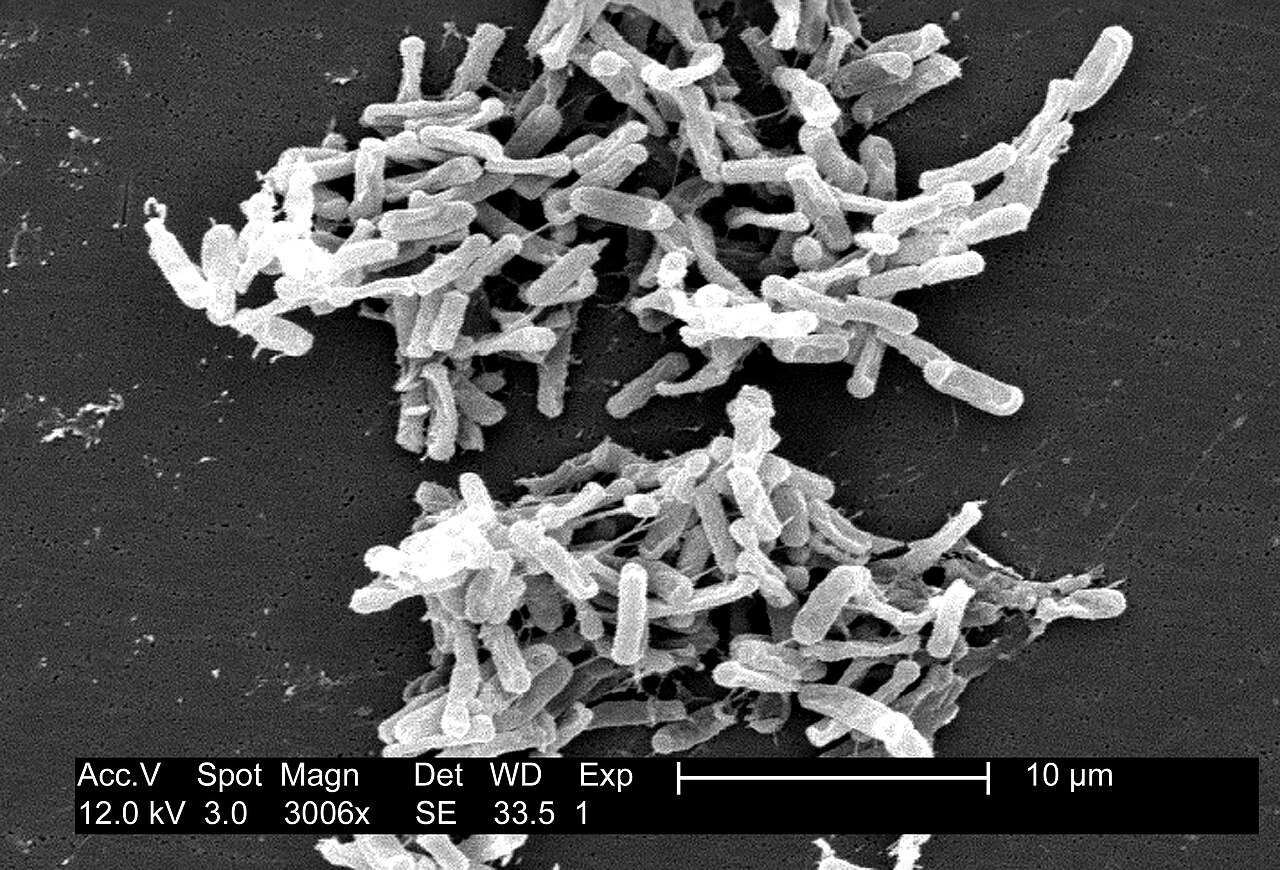

De paden
| Pad | Mechanisme | Bewijs bij mensen |
|---|---|---|
| Vagus zenuw | Afferente vezels dragen darm signalen naar de hersenstam | Anatomisch vastgesteld; causale rol moeilijker te testen |
| Microbiele metabolieten | Korte-keten vetzuren en neurotransmitterprecursors komen in de circulatie | Meetbaar; downstream effecten onduidelijk |
| Immuun signalering | Darmpermeabiliteit en inflammatoire cytokines | Associaties vastgesteld; richting betwist |
| HPA-as | Stresshormonen veranderen de darmfunctie en vice versa | Bidirectioneel en goed gedocumenteerd |
| Enterisch zenuwstelsel | Intrinsieke darmneuronen die semi-autonoom functioneren | Goed gekarakteriseerd |
Geen van dit is fringe. Het enterisch zenuwstelsel bevat honderden miljoenen neuronen en functioneert met aanzienlijke autonomie. De toestand van de darm beïnvloedt de stemming en de stemming beïnvloedt de darmfunctie, zoals iedereen die nerveus is geweest voor een examen al weet.
Darm-hersen communicatiewegen
Het richtingprobleem
Systematische review vindt microbiota-verschillen tussen mensen met depressie of angst en controles [2]. De vraag die alles beslist is welke kant de pijl op wijst.
Depressie verandert wat mensen eten, hoeveel ze bewegen, hoe ze slapen en vaak welke medicatie ze nemen. Elk van die veranderingen beïnvloedt de microbiota. Een verschil in microbiele samenstelling is daarom precies wat je zou verwachten als depressie de microbiota-verandering veroorzaakt en de microbiota helemaal niets doet.
Dezelfde moeilijkheid geldt voor de literatuur over het metabool syndroom [3] en voor het autismeonderzoek [4], waar dieetselectiviteit gebruikelijk is en microbiota-verschillen op zichzelf zou produceren.
Wat zou het oplossen
Gerandomiseerde proeven van gedefinieerde microbiome-interventies met klinische eindpunten, adequate duur en adequate steekproefgrootte. Die beginnen te verschijnen en zijn de reden dat deze pagina zal veranderen. Tot die tijd is de eerlijke positie dat de as bestaat en de consumentenapplicaties die daarop zijn gebouwd onbewijsbaar zijn — zie probiotica.
Veelgestelde vragen
Is de darm echt een "tweede brein"?
Komt 90% van de serotonine uit de darm?
Kan het aanpassen van mijn dieet mijn stemming via mijn darm veranderen?
Wat moet ik nu echt doen?

Related reading
References
Every citation below links to the original peer-reviewed record on PubMed or via DOI. Nothing here is a substitute for medical advice.
-
The complex relationship between gut microbiota and Alzheimer's disease: A systematic review Zhou XP, Sun LB, Liu WH, et al. · Ageing research reviews · 2025 · Systematic review DOIPubMed 39662839
-
Gut microbiota variations in depression and anxiety: a systematic review Cao Y, Cheng Y, Pan W, et al. · BMC psychiatry · 2025 · Systematic review DOIPubMed 40312666Full text
-
Exploring the gut-exercise link: A systematic review of gastrointestinal disorders in physical activity Al-Beltagi M, Saeed NK, Bediwy AS, et al. · World journal of gastroenterology · 2025 · Systematic review DOIPubMed 40539198Full text
-
The Microbiota-Gut-Brain Axis in Metabolic Syndrome and Sleep Disorders: A Systematic Review Dos Santos A, Galiè S · Nutrients · 2024 · Systematic review DOIPubMed 38337675Full text
-
Systematic review: Autism spectrum disorder and the gut microbiota Korteniemi J, Karlsson L, Aatsinki A · Acta psychiatrica Scandinavica · 2023 · Systematic review DOIPubMed 37395517
-
Microbiota in Autism Spectrum Disorder: A Systematic Review Lewandowska-Pietruszka Z, Figlerowicz M, Mazur-Melewska K · International journal of molecular sciences · 2023 · Systematic review DOIPubMed 38068995Full text
-
The gut microbiota-brain axis, psychobiotics and its influence on brain and behaviour: A systematic review Barrio C, Arias-Sánchez S, Martín-Monzón I · Psychoneuroendocrinology · 2022 · Systematic review DOIPubMed 34942539
-
The Gut Microbiome in Depression and Potential Benefit of Prebiotics, Probiotics and Synbiotics: A Systematic Review of Clinical Trials and Observational Studies Alli SR, Gorbovskaya I, Liu JCW, et al. · International journal of molecular sciences · 2022 · Systematic review DOIPubMed 35562885Full text
-
The gut microbiota in anxiety and depression - A systematic review Simpson CA, Diaz-Arteche C, Eliby D, et al. · Clinical psychology review · 2021 · Systematic review DOIPubMed 33271426
-
Probiotics for Alzheimer's Disease: A Systematic Review Naomi R, Embong H, Othman F, et al. · Nutrients · 2021 · Systematic review DOIPubMed 35010895Full text
-
Mediterranean diet, gut microbiota, and cognitive decline in older adults with obesity/overweight and metabolic syndrome: a prospective cohort study Ni J, Hernández-Cacho A, Nishi SK, et al. · BMC medicine · 2025 · Randomised controlled trial DOIPubMed 41327300Full text
-
Probiotic Supplementation Improves Cognitive Function and Mood with Changes in Gut Microbiota in Community-Dwelling Older Adults: A Randomized, Double-Blind, Placebo-Controlled, Multicenter Trial Kim CS, Cha L, Sim M, et al. · The journals of gerontology. Series A, Biological sciences and medical sciences · 2021 · Randomised controlled trial DOIPubMed 32300799Full text
-
The gut microbiota-immune-brain axis: Therapeutic implications O'Riordan KJ, Moloney GM, Keane L, et al. · Cell reports. Medicine · 2025 · Review DOIPubMed 40054458Full text
-
The microbiota-gut-brain axis and neurodevelopmental disorders Wang Q, Yang Q, Liu X · Protein & cell · 2023 · Review DOIPubMed 37166201Full text
-
The Microbiota-Gut-Brain Axis in Psychiatric Disorders Góralczyk-Bińkowska A, Szmajda-Krygier D, Kozłowska E · International journal of molecular sciences · 2022 · Review DOIPubMed 36232548Full text
-
Human gut microbiota/microbiome in health and diseases: a review Gomaa EZ · Antonie van Leeuwenhoek · 2020 · Review DOIPubMed 33136284
-
The Microbiota-Gut-Brain Axis Cryan JF, O'Riordan KJ, Cowan CSM, et al. · Physiological reviews · 2019 · Review DOIPubMed 31460832